What a Gut Health Microbiome Support Supplement Does: Resistant Starch Explained
Quick answer
Resistant starch is starch that survives digestion in the small intestine and arrives in the colon intact, where bacteria ferment it into short-chain fatty acids — mainly acetate, propionate and butyrate. That fermentation, not any absorption of the starch itself, is the whole mechanism behind a gut health microbiome support supplement built on this ingredient.
- Doses used in studies: typically 15–30 g a day, against a typical Western intake of only a few grams.
- What it produces: short-chain fatty acids, with butyrate the main fuel for the cells lining the colon.
- What to expect first: wind and bloating for a week or two, which is fermentation working, not a fault.
Most supplement ingredients are sold on what they do to you once absorbed. Resistant starch is unusual because its selling point is that it is never absorbed at all. It passes through the small intestine untouched, and the interesting part happens further down, in a compartment you cannot feel and cannot easily measure.
That makes it one of the more honest ingredients in the category, and one of the more misrepresented. The mechanism is well described. The size of the benefit in an ordinary healthy adult is much less certain than the marketing around fibre powders suggests.
What resistant starch actually is
Ordinary starch is a chain of glucose molecules that amylase — in saliva and then in the small intestine — breaks apart into glucose for absorption. Resistant starch is the fraction of starch that amylase cannot get at, or cannot get at quickly enough, before it leaves the small intestine.
Nutritionists split it into five types, and the distinction is practical rather than academic, because the types behave differently in cooking and in a capsule:
- RS1 — physically inaccessible starch, locked inside intact cell walls. Whole and coarsely milled grains, seeds and legumes. Grinding destroys it.
- RS2 — native granular starch with a crystalline structure enzymes struggle to attack. Raw potato starch, green banana, high-amylose maize. Cooking in water largely destroys it.
- RS3 — retrograded starch. Cooked starch that has been cooled, allowing some of the gelatinised chains to recrystallise into a form amylase handles poorly. This is the cooked-and-cooled potato, rice and pasta effect.
- RS4 — chemically modified starches created to resist digestion. Common in processed foods and in some fibre powders.
- RS5 — starch complexed with lipids, which shields it from enzymes.
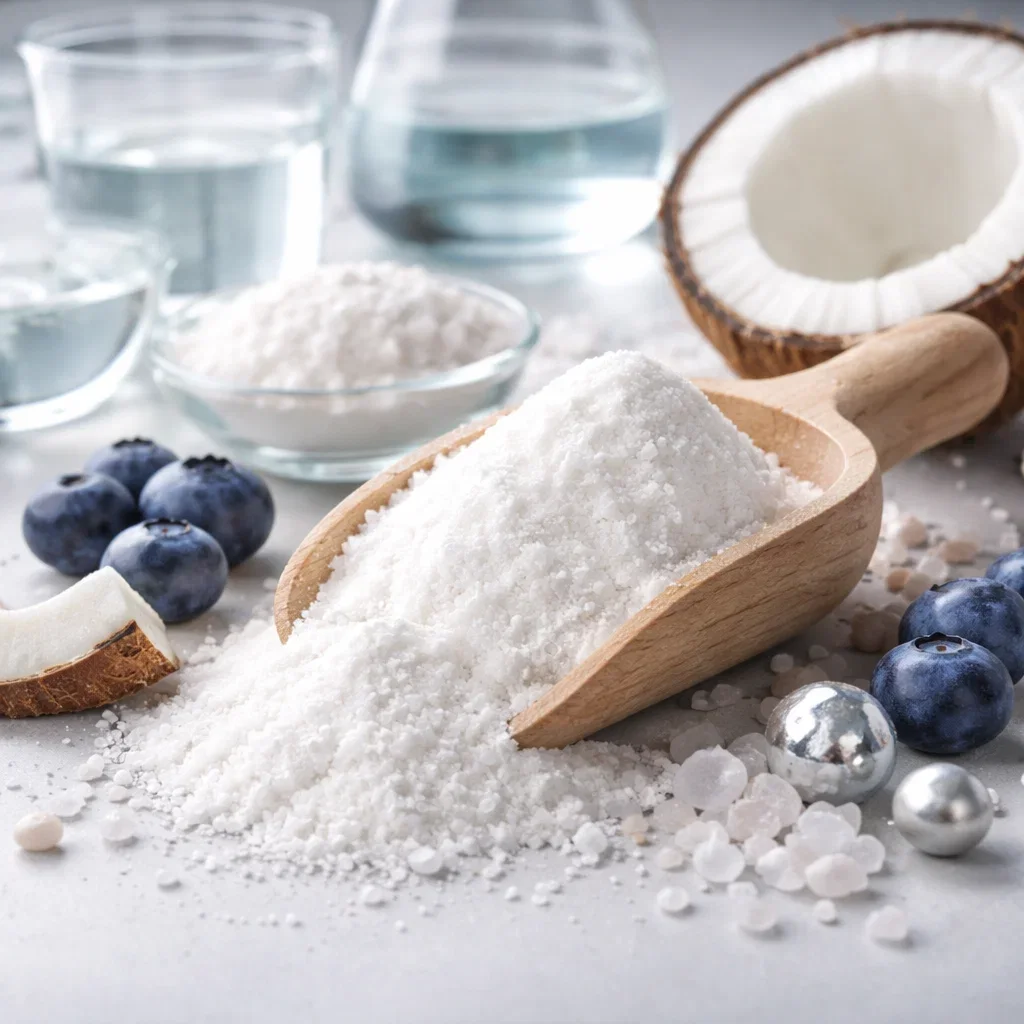
The types matter to anyone buying a powder because heat treatment can quietly convert an RS2 product into ordinary digestible starch. Raw potato starch stirred into cold water keeps its resistant fraction. The same powder baked into a muffin largely does not.
What it feeds, and why short-chain fatty acids matter
The colon holds a dense bacterial population that lives on what your own enzymes could not digest. Resistant starch is one of its preferred substrates. Fermentation of that starch yields gas — hydrogen, carbon dioxide, sometimes methane — and short-chain fatty acids, principally acetate, propionate and butyrate.
Butyrate is the one that gets the attention, and for a defensible reason: it is the preferred energy source for colonocytes, the cells lining the colon wall. Those cells take up butyrate directly from the gut lumen rather than from the bloodstream, which is an unusual arrangement and the reason researchers keep returning to it. Propionate is largely taken up by the liver. Acetate circulates more widely.
There is a second, less-discussed detail that explains a lot of the variation between people. Breaking down the crystalline granules of RS2 appears to depend heavily on particular bacteria — Ruminococcus bromii is the one most often described as a keystone species for this job. People who carry little of it ferment resistant starch poorly, and get less out of the same dose. This is one of the honest reasons why individual responses to the same fibre powder differ so widely, and why no gut health microbiome support supplement can promise a specific result in a specific person.
Resistant starch does not act on you. It acts on an ecosystem that varies enormously from person to person, and the size of what you get back depends on which organisms happen to be living there.
How much a gut health microbiome support supplement has to deliver
Intake estimates for Western diets generally land in the range of a few grams a day — commonly cited as around 3 to 9 grams, depending on the country and the measurement method. Intervention studies that report meaningful shifts in fermentation markers have usually used considerably more, in the region of 15 to 30 grams a day, sometimes higher.
That gap is the practical case for a powder. It is difficult, though not impossible, to reach 20 grams of resistant starch a day from food alone without eating a great deal of legumes and cooled starches. It is trivially easy with a scoop of potato starch.
| Source or form | Type | Rough resistant starch per usual serving | Practical note |
|---|---|---|---|
| Raw potato starch (powder) | RS2 | Very high — the majority of the powder by weight | Must stay uncooked; stir into cold food or drink |
| High-amylose maize starch (powder) | RS2 | High, though typically less than raw potato starch | More heat-tolerant than potato starch |
| Green banana flour | RS2 | High | Falls as the fruit ripens and starch turns to sugar |
| Cooked and cooled potato | RS3 | A gram or two | Cooling is what forms it; reheating keeps most of it |
| Cooked and cooled rice or pasta | RS3 | A gram or two | Same mechanism, similar modest yield |
| Cooked legumes (beans, lentils) | RS1 + RS3 | A few grams per cooked cup | Also supplies conventional fibre and protein |
| Oats, rolled or steel-cut | RS1 + RS3 | Modest | Finer processing lowers the resistant fraction |
Two labelling traps are worth knowing before you compare products. First, a tub sold by total weight is not a tub of resistant starch — the resistant fraction is a percentage of it, and reputable products state that percentage. Second, "prebiotic blend" on a front label tells you nothing about dose; the Supplement Facts panel does. If you are shopping for the best fibre supplement for gut health and weight loss, the grams of resistant starch per serving is the only number that lets you compare one tub with another.
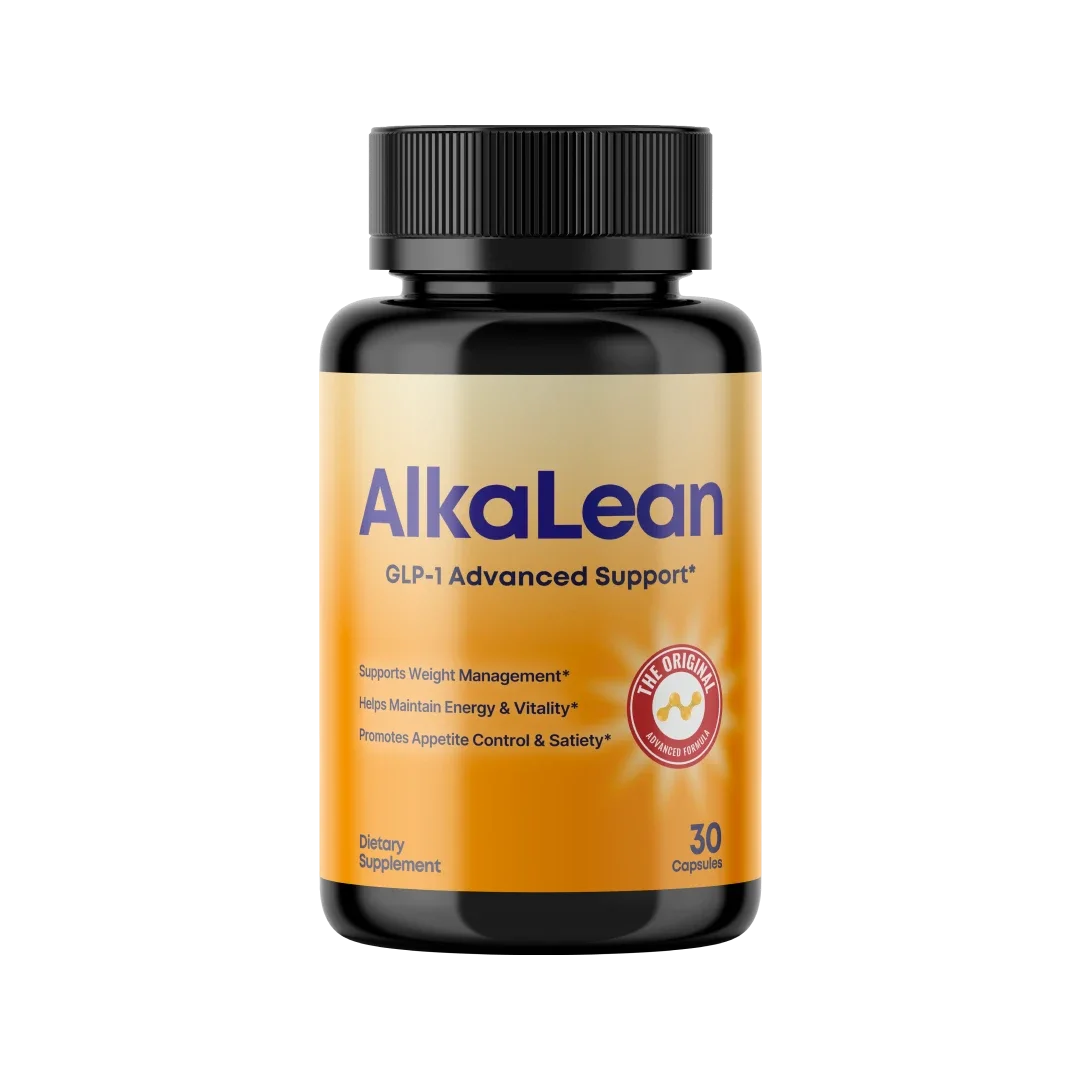
Looking at the AlkaLean label instead?
AlkaLean is not a fibre product — it names apple cider vinegar and three mineral BHB salts. If that is what you came for, the official store is the place to check the current price and what is in the box.
See the official storeFood first, powder second
The cooked-and-cooled trick is real and it is also small. Cooling gelatinised starch lets a fraction of it recrystallise, and reheating does not undo most of that, so leftover potatoes and yesterday's rice genuinely carry more resistant starch than the freshly cooked version. What they do not carry is 20 grams of it. Treating a bowl of cold pasta salad as equivalent to a measured dose overstates the effect by an order of magnitude.
Where food does win is company. Legumes, oats and intact grains bring conventional fibre, protein and polyphenols alongside the resistant fraction, and the fermentation profile of a mixed food matrix is not the same as the profile of one purified starch. Anyone hunting for the best gut health supplement is often better served by three servings of beans a week than by a fourth tub of powder.
The reasonable position is not food-versus-powder. It is that a powder is a convenient way to close a measurable gap, and closing that gap is the only thing it does.

What the evidence supports, and how strongly
Evidence quality varies sharply across the outcomes people buy resistant starch for. Grouping it honestly is more useful than a list of promising headlines.
| Outcome | What the research base looks like | How strong |
|---|---|---|
| Increased short-chain fatty acid production | Consistent across human feeding studies and fermentation models; this is the core, well-replicated finding | Strong |
| Shifts in the composition of gut bacteria | Reliably observed, but the shifts differ between people and the health meaning of a given shift is often unclear | Moderate |
| Stool bulk and regularity | Reasonable support, as with fermentable fibres generally | Moderate |
| Post-meal blood glucose and insulin response | Several trials report improvement, others do not; effects appear to vary by dose, duration and the individual | Mixed |
| Appetite, fullness and body weight | Some short trials report modest changes in satiety; weight effects are small and inconsistent | Weak |
| Any disease outcome | Not established. Resistant starch is a food component, not a therapy | Not supported |
The pattern is typical of fibre research: the mechanism is solid, the intermediate markers move, and the further you get from the colon the weaker the evidence becomes. A gut health microbiome support supplement that stays inside that boundary is describing something real. One that leaps from butyrate to weight loss has left the evidence behind several steps ago.
What resistant starch cannot do, and who should be careful
It cannot treat, cure or prevent any disease, and no seller may lawfully say otherwise. It is not a treatment for irritable bowel syndrome, inflammatory bowel disease, coeliac disease or any diagnosed condition of the gut.
It is not a weight loss agent. Resistant starch yields roughly half the energy of digestible starch because fermentation is less efficient than absorption, but swapping a few grams a day does not amount to a meaningful calorie deficit. Any fullness effect is modest and does not survive a diet that is not otherwise controlled.
It is not universally well tolerated. Fermentable substrates are FODMAPs in the broad sense, and people with IBS — particularly those who improve on a low-FODMAP diet — may find that resistant starch makes bloating and pain worse rather than better. That is a real and reasonably common response, not a detox reaction to push through.
And it cannot be assumed to work equally in everyone, for the keystone-species reason above. Two people can take an identical dose for eight weeks and produce quite different amounts of butyrate.
Speak to a clinician first if you have a diagnosed digestive condition, if you have had bowel surgery, if you are pregnant or breastfeeding, or if you take medication whose absorption might be affected by a large daily dose of fermentable material.
Starting without a rough fortnight
The single most common mistake is a full scoop on day one. Fermentation capacity adapts, but it adapts over weeks, and a colon that has been handling four grams a day will produce a great deal of gas when handed twenty.
A workable approach is to start around a teaspoon — roughly five grams of powder — once a day, hold it for a week or two, then add another five grams. Take it with food or in a cold drink. Expect wind. Judge the result at six to eight weeks rather than six to eight days, because the changes being measured in studies are changes in a bacterial population, and populations move slowly.
If bloating is severe or persistent at a small dose, that is information. Stop, and take the question to a dietitian rather than adding a second product on top.
For context on how a very different kind of supplement behaves, our piece on L-glutamine and the gut lining covers an ingredient that is absorbed in the small intestine and never reaches the fermentation stage at all — the mirror image of resistant starch. And if you arrived here from the AlkaLean formula page, it is worth being clear that AlkaLean is a ketone and mineral product rather than a fibre one; the two do entirely different jobs and neither substitutes for the other.
See the current AlkaLean price
If you were working out where to buy weight loss supplements without going through a marketplace reseller, the official store is the only place we link to. Current pricing, a single-bottle option and a 60-day money-back guarantee.
Order NowFrequently asked questions
How much resistant starch should I take per day?
Human trials have generally used 15 to 30 grams a day, and most Western diets supply only a few grams. Start at about 5 grams a day and add 5 grams every week or two, because going straight to a full scoop is the usual cause of gas and bloating.
Does resistant starch cause bloating?
Often, at first. Fermentation produces gas, so wind and a fuller feeling in the first week or two are expected rather than a sign something is wrong. It usually settles as intake stays steady. If it does not settle, or if you have IBS, reduce the dose and speak to a clinician.
Does cooking and cooling potatoes or rice really make resistant starch?
Yes, but the amounts are small. Cooling gelatinised starch lets some of it recrystallise into type 3 resistant starch, adding roughly one to three grams per serving. Reheating keeps most of what formed. It is a genuine effect and a minor one next to a measured powder.
Is resistant starch the same as fibre?
It behaves like one. Resistant starch is starch that escapes digestion in the small intestine and ferments in the colon, so it is counted as dietary fibre in most labelling systems, but it is chemically starch rather than a non-starch polysaccharide.