Gut Health Supplements L Glutamine: What the Research on the Gut Lining Covers
Quick answer
L-glutamine is the most abundant free amino acid in the body and the preferred fuel of the cells lining the small intestine, which is the entire reason it appears in gut formulas. The laboratory evidence that those cells need it is strong; the human evidence that supplementing a healthy, well-fed adult changes anything is thin.
- Doses studied: commonly 5–30 g a day, split into two or three doses.
- Best-supported settings: clinical nutrition in severe illness, injury and specific gut conditions — not general wellness.
- Diet already supplies: roughly 3–6 g a day from ordinary protein foods.
Almost every product in the category names it, usually first on the label and usually with a sentence about sealing, soothing or rebuilding. The underlying biology is real and genuinely interesting. The distance between that biology and the sentence on the label is the part worth walking through.
Type gut health supplements l glutamine into a search box and the results are close to interchangeable: the same amino acid, the same three verbs, the same implied claim about a barrier you cannot see. What separates them is not the story. It is the number of grams per serving, and whether the people in the research resemble you at all.
What L-glutamine is, and why the gut takes so much of it
Glutamine is an amino acid your body makes for itself, principally in skeletal muscle, which is why it is classed as non-essential. It is also the most abundant free amino acid in blood and in muscle tissue, and it does more jobs than most: it moves nitrogen safely between tissues, it feeds fast-dividing cells, and it is a substrate for glutathione, one of the body's main antioxidant systems.
The gut-specific point is metabolic. Enterocytes — the absorptive cells of the small intestine — burn glutamine as a primary respiratory fuel rather than relying mainly on glucose. Because they are among the fastest-turning-over cells in the body, replacing themselves over a matter of days, they need a continuous supply of both fuel and the building blocks for new DNA. Glutamine supplies both.
This has a consequence people rarely mention when selling it. A large share of the glutamine you swallow is consumed by the gut wall and the liver before it ever reaches general circulation. For anyone taking it for muscle, that is poor bioavailability. For anyone taking it for the gut, it is the closest thing to targeted delivery an oral supplement gets.
Glutamine is described as conditionally essential, and the condition matters. In severe burns, major trauma, sepsis and prolonged catabolic illness, the body's own production cannot keep pace with demand and plasma glutamine falls. In an ordinary adult eating enough protein, it does not.
The gut lining, tight junctions and what "leaky gut" means
The barrier between the inside of your intestine and the rest of you is one cell thick. What stops material passing between those cells is a ring of proteins at the cell junctions — occludin, the claudins, zonula occludens-1 — which behave less like cement and more like an adjustable gate.
Increased intestinal permeability is a real, measurable phenomenon. It is documented in coeliac disease, in Crohn's disease, after courses of non-steroidal anti-inflammatory drugs, in severe burns, and transiently after hard endurance exercise in heat. Researchers measure it with sugar-absorption tests, most commonly the lactulose-to-mannitol ratio.
"Leaky gut syndrome" as sold to consumers is a much broader idea: a single condition said to explain fatigue, brain fog, joint aches, skin problems and food intolerance. That syndrome is not a recognised medical diagnosis, and the direct-to-consumer blood tests marketed to detect it — zonulin assays in particular — are contested on validity grounds. Increased permeability is also frequently a consequence of gut disease rather than its cause, which matters a great deal when someone is treating a marker instead of a diagnosis.
Glutamine deprivation reliably damages barrier function in a dish. That is not the same finding as glutamine supplementation improving barrier function in a person who was never short of it.
Where the human evidence is strongest, and where it stops
The research base is unusually lopsided. There is a great deal of cell and animal work, a respectable clinical-nutrition literature in severe illness, and very little in the population that actually buys gut powders.
| Setting | What has been studied | Evidence strength |
|---|---|---|
| Cell culture and animal models | Glutamine deprivation lowers tight junction protein expression; restoring it restores barrier function | Consistent, but a model rather than a person |
| Critical illness, burns, major surgery | Decades of clinical nutrition trials of enteral and intravenous glutamine, with mixed outcomes | Large but conflicting — and one major trial found harm at high doses in patients with organ failure |
| Short bowel syndrome | Used as part of a supervised regimen alongside modified diet and, in some protocols, growth hormone | Specialist use, under medical supervision |
| Chemotherapy and radiotherapy mucositis | Multiple small trials of oral glutamine | Mixed; not a settled recommendation |
| Post-infectious IBS with raised permeability | A small randomised trial reported symptom improvement at roughly 5 g three times daily | Promising, single-study, awaiting replication |
| Exercise-induced permeability | Small studies in athletes, short duration, surrogate endpoints | Weak, though mechanistically plausible |
| Healthy adults with vague digestive complaints | Very little direct evidence exists | Not established |
The trial worth knowing about in detail is the one that went the wrong way. A large multicentre study of high-dose glutamine in critically ill patients with multi-organ failure was stopped early because the supplemented group did worse, not better. It changed practice, and it is the strongest available argument against the assumption that an amino acid your body already makes must be harmless at any dose in any state.
Here for AlkaLean rather than glutamine?
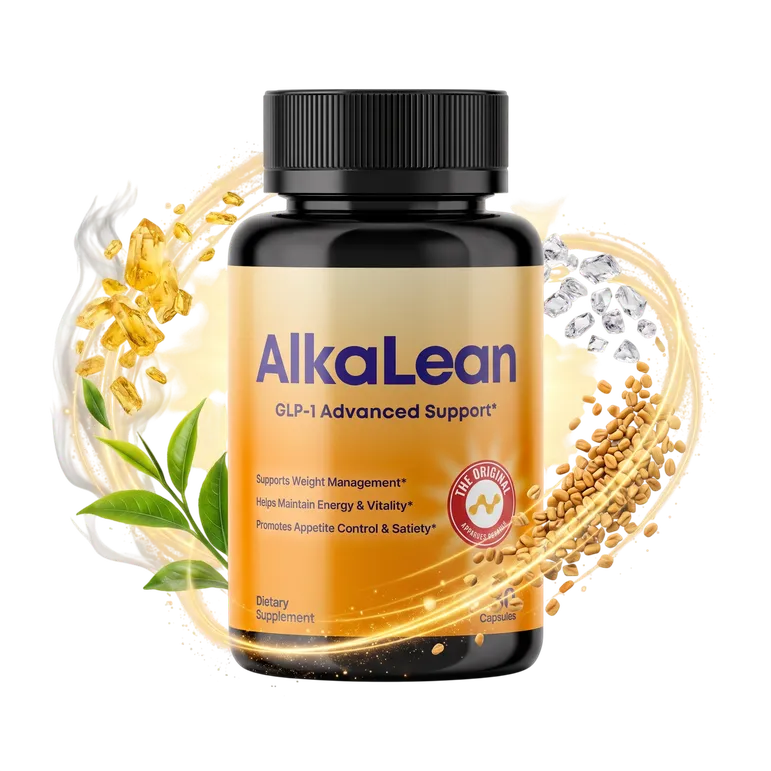
AlkaLean carries no amino acids — it names apple cider vinegar and three mineral BHB salts. The official store is where the current price and the full label live.
See the official storeGut health supplements l glutamine: forms, doses and what they cost you in pills
Once you know the doses used in research, most of the shopping decisions make themselves. The gap between a label that says "contains L-glutamine" and a label that supplies a studied amount is usually an order of magnitude.
| Form | Typical amount per serving | To reach 5 g | Notes |
|---|---|---|---|
| Free-form L-glutamine powder | 5 g per level scoop | One scoop | The form used in most research; lowest cost per gram; nearly tasteless |
| Capsules | 500–1000 mg each | 5–10 capsules | Convenient at low doses, impractical and expensive at study doses |
| Alanyl-glutamine dipeptide | Varies by product | Depends on the glutamine fraction | More soluble and more stable in solution; developed for clinical nutrition; costs more |
| "Glutamine peptides" from hydrolysed protein | Rarely stated as free glutamine | Cannot be calculated from the front label | Glutamine content varies; check the Supplement Facts panel |
| Blended gut formula | Often a few hundred milligrams | Usually unreachable | Proprietary blends often hide the individual amount entirely |
| Ordinary protein food | Roughly 3–6 g a day across a mixed diet | — | Beef, dairy, eggs, fish, tofu, beans and cabbage all contribute |
Two practical notes. Free glutamine is not indefinitely stable once dissolved, particularly in acidic liquid, so mixing a jug in the morning for the day is worse than mixing each dose. And the common advice to take it on an empty stomach rests on very little; splitting the daily amount across two or three doses has more support than any particular timing ritual.
If you are comparing products for the best glutamine supplement for gut health, the only two numbers that separate them are grams of free L-glutamine per serving and servings per container. Everything else on the front of the tub is decoration. That single filter removes most of the shortlist, because a large share of the products sold as gut health supplements l glutamine are blends carrying a few hundred milligrams inside a proprietary mix.
Food supplies more than most people assume
A mixed diet containing adequate protein delivers several grams of glutamine a day, and the body synthesises considerably more on top of that. Whey and casein, beef, eggs, fish, tofu, lentils and cabbage all contribute. This is the reason a deficiency in a healthy adult who eats enough is not really a thing that happens.
It also reframes the question. The realistic case for supplementing is not "I am short of glutamine" but "I want to deliver an unusually large amount to the gut wall for a period of weeks". That is a coherent thing to want. It is simply a different claim, and a much smaller one, than fixing a deficiency.
Anyone shortlisting the best gut health daily supplement should also weigh the boring options against the interesting one: adequate protein, enough fermentable fibre, sleep, and not taking anti-inflammatories more often than necessary all act on the same barrier, and cost nothing. None of that is an argument against gut health supplements l glutamine formulas — it is an argument for knowing what you are adding them to.
What L-glutamine cannot do, and who should be careful
It cannot diagnose, treat, cure or prevent any disease, and no product may lawfully say it does. It is not a therapy for IBS, coeliac disease, Crohn's disease or ulcerative colitis. If your symptoms are persistent, if there is blood, unintended weight loss, fever or night-time waking with pain, that is a reason to be examined rather than supplemented — those are alarm features, and an amino acid does not address them.
It is also not a certainty at the individual level. Even in the settings where trials exist, the results are inconsistent enough that the honest description is "may help some people in some circumstances", and anyone telling you more than that is describing marketing rather than evidence.
Specific caution belongs with the following groups, all of whom should speak to a doctor before starting:
- Liver disease, particularly cirrhosis. Glutamine metabolism generates ammonia, and a compromised liver clears it poorly.
- Reduced kidney function. A large added nitrogen load is not neutral.
- A history of seizures, and anyone taking anticonvulsant medication, on theoretical grounds related to glutamate.
- An active cancer diagnosis. How tumour cells use glutamine is an open research question; this is a conversation for an oncologist, not a shop assistant.
- Pregnancy and breastfeeding, where supplemental doses have not been established as safe.
- Critical illness, for the reason described above.
Judging whether it is doing anything
Change one thing at a time, keep a simple symptom note, and give it four to eight weeks. Permeability testing is a research tool rather than a consumer one, and the home tests sold as a substitute do not carry the validation to guide a decision. If nothing has changed after two months at a study-level dose, the reasonable conclusion is that it is not working for you.
For the other half of the picture — the fermentation end of the gut, where nothing is absorbed at all — our piece on what resistant starch feeds covers an ingredient that never gets near the small-intestine barrier. And if you came in from the AlkaLean ingredient page, it is worth stating plainly that AlkaLean is a ketone and mineral formula with no amino acid content; the two categories are not interchangeable.
See the current AlkaLean price
If you were trying to work out where to buy weight loss supplements without going through a third-party marketplace, the official store is the only link we carry. Current pricing, a single-bottle option and a 60-day money-back guarantee.
Order NowFrequently asked questions
How much L-glutamine do studies use for the gut?
Most human work sits between 5 and 30 grams a day, usually split into two or three doses. The smaller randomised gut studies have tended to use around 5 grams taken three times daily. There is no established optimal dose for a healthy adult with no diagnosed condition.
Does L-glutamine repair a leaky gut?
That is not a claim the evidence supports. Glutamine maintains barrier function in laboratory and animal models, and a small number of human trials in specific groups have measured changes in intestinal permeability. Leaky gut as a consumer diagnosis is not a recognised medical condition, and no supplement may claim to treat one.
Is it safe to take L-glutamine every day?
It is generally well tolerated in healthy adults at typical supplement doses, and it is an amino acid already present in food. Anyone with liver disease, kidney impairment, a seizure history or an active cancer diagnosis should ask a doctor first, and a large trial in critically ill patients with organ failure found harm at high doses.
Powder or capsules for L-glutamine?
Powder, for arithmetic reasons. Capsules usually hold 500 to 1000 milligrams, so a 5 gram dose means five to ten of them. Powder reaches study doses in one scoop at a lower cost per gram, which is why almost every product using research-level amounts is sold that way.